Austin Community College's Round Rock campus will launch a therapeutic Dungeons & Dragons group this fall, addressing social isolation among students at a commuter school.
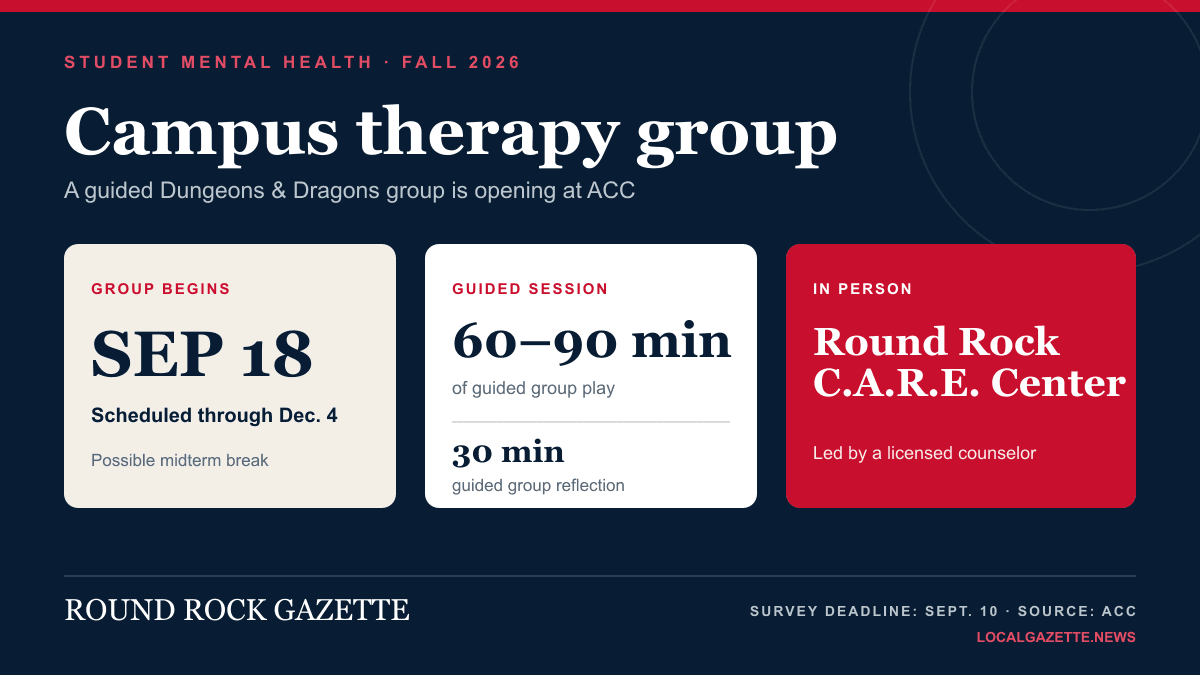
The program begins September 18 at the Round Rock C.A.R.E. Network Center and runs through December 4. Licensed Mental Health Counselor Mary Forrest-Wright will facilitate the sessions, which combine 60 to 90 minutes of gameplay with a 30-minute reflection period.
The group targets students struggling with social anxiety and loneliness. According to Forrest-Wright, many students—particularly a generation affected by the COVID-19 pandemic—lack safe spaces to practice connecting with others. The therapeutic format differs from casual D&D games because a trained counselor guides the experience.
How It Works
Each group meeting starts with gameplay led by Forrest-Wright in her role as Game Master. She establishes ground rules and confidentiality agreements during an initial "session zero," following D&D tradition. Players control their own comfort levels and need not have gaming or acting experience.
After gameplay concludes, the group participates in what Forrest-Wright calls "player aftercare," a structured discussion connecting in-game experiences to real-world skills. Students learn coping strategies for stress and anxiety while developing collaboration, communication, and decision-making abilities.
The program targets any ACC student interested in building confidence and friendships. No prior D&D experience is required. However, the group operates as a closed enrollment, requiring students to commit to the full session rather than attending sporadically.
Access and Details
The group meets in person at the Round Rock C.A.R.E. Network Center. A possible break is planned around midterms. Students interested in joining must complete a brief survey by September 10 to attend an information session, offered online or in person.
The therapeutic gaming format represents one of several mental health services ACC provides to address student wellness at its commuter campuses.
Source: This report is based on information published by Austin Community College District.